1
/
of
1
AV8 ACE
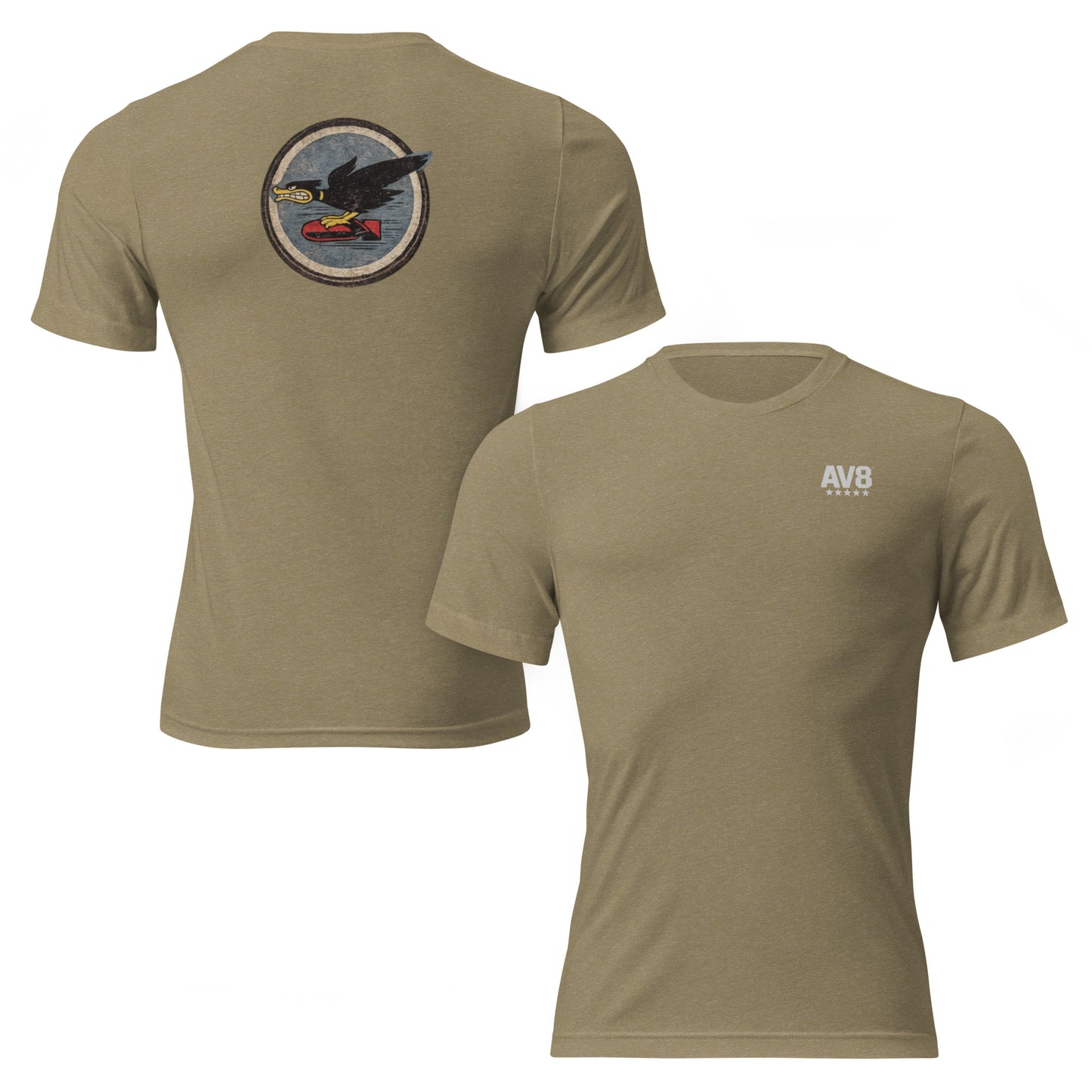
AV8 Ace 600th Bombardment Squadron Vintage T
AV8 Ace 600th Bombardment Squadron Vintage T
Regular price
$32.00 USD
Regular price
Sale price
$32.00 USD
Quantity
Couldn't load pickup availability
The 600th Bombardment Squadron (Heavy) served as part of the distinguished 398th Bombardment Group under the Eighth Air Force during World War II. Activated as a Boeing B-17 Flying Fortress unit, the squadron deployed to RAF Nuthampstead, England, in 1944 and entered combat during the height of the Allied strategic bombing campaign against Nazi Germany. Flying deep into heavily defended enemy territory, the 600th targeted oil refineries, aircraft factories, rail centers, and industrial complexes critical to the German war effort, helping weaken the Luftwaffe and cripple Axis production capabilities.
Beginning combat operations in May 1944, the squadron quickly became involved in some of the most important campaigns of the European air war. The 600th supported the Normandy invasion by bombing transportation networks and defensive positions ahead of D-Day, then continued operations during the Allied advance across France and into Germany. During the Battle of the Bulge, the squadron attacked rail yards, troop concentrations, and supply routes in support of embattled Allied ground forces. Like many Eighth Air Force bomber units, crews routinely faced intense anti-aircraft fire and attacks from German fighters while flying dangerous daylight bombing missions over occupied Europe.
One of the squadron’s most notable wartime incidents occurred in April 1945 when a heavily damaged B-17 from the 600th survived an attack by a German Messerschmitt Me 262 and successfully returned to base despite catastrophic structural damage. The squadron continued flying combat operations until the final weeks of the war in Europe, contributing to the destruction of Germany’s military infrastructure and the eventual Allied victory. Following the end of hostilities, the 600th Bombardment Squadron was inactivated in September 1945, leaving behind a legacy of resilience, sacrifice, and strategic air power.
• 50% polyester, 25% combed ring-spun cotton, 25% rayon
• Fabric weight: 3.4 oz/yd² (115.3 g/m²)
• Pre-shrunk for extra durability
• 40 singles
• Regular fit
• Side-seamed construction
• Blank product sourced from Guatemala, Nicaragua, Honduras, or the US
Disclaimer: The fabric is slightly sheer and may appear see-through, especially in lighter colors or under certain lighting conditions.
Beginning combat operations in May 1944, the squadron quickly became involved in some of the most important campaigns of the European air war. The 600th supported the Normandy invasion by bombing transportation networks and defensive positions ahead of D-Day, then continued operations during the Allied advance across France and into Germany. During the Battle of the Bulge, the squadron attacked rail yards, troop concentrations, and supply routes in support of embattled Allied ground forces. Like many Eighth Air Force bomber units, crews routinely faced intense anti-aircraft fire and attacks from German fighters while flying dangerous daylight bombing missions over occupied Europe.
One of the squadron’s most notable wartime incidents occurred in April 1945 when a heavily damaged B-17 from the 600th survived an attack by a German Messerschmitt Me 262 and successfully returned to base despite catastrophic structural damage. The squadron continued flying combat operations until the final weeks of the war in Europe, contributing to the destruction of Germany’s military infrastructure and the eventual Allied victory. Following the end of hostilities, the 600th Bombardment Squadron was inactivated in September 1945, leaving behind a legacy of resilience, sacrifice, and strategic air power.
• 50% polyester, 25% combed ring-spun cotton, 25% rayon
• Fabric weight: 3.4 oz/yd² (115.3 g/m²)
• Pre-shrunk for extra durability
• 40 singles
• Regular fit
• Side-seamed construction
• Blank product sourced from Guatemala, Nicaragua, Honduras, or the US
Disclaimer: The fabric is slightly sheer and may appear see-through, especially in lighter colors or under certain lighting conditions.
Share